
Your first meaningful friendships abroad may begin in your hostel, not at a formal university event. Building a social life as a Pakistani student abroad means staying open to cultural differences and making regular connections through accommodation, student societies, campus activities, classmates and professors. Small steps, such as joining a conversation or asking a question in class, can help turn unfamiliar surroundings into a community.
It’s natural to miss familiar routines and close-knit support while adjusting to a new country, and making friends can take time. This guide explains how cultural differences shape everyday interactions, how hostel life can create informal connections, and how university events and peer relationships fit into the process. You’ll also learn how to approach classmates and professors with confidence, building connections at your own pace while making the most of student life abroad.
Key Takeaways
- Recognise that cultural adjustment can move through different stages, and use curiosity and clear communication to handle unfamiliar social norms.
- Turn hostel routines into opportunities to meet people by being open to shared meals, conversations and everyday campus life.
- Use university societies, events and extracurricular activities to find people with shared interests and build connections beyond your course.
- Stay in touch with loved ones while gradually creating local friendships through student communities and peer networks.
- Build stronger academic relationships by participating in discussions, asking questions and engaging respectfully with professors and classmates.
1. Cultural differences between Pakistan and study destinations
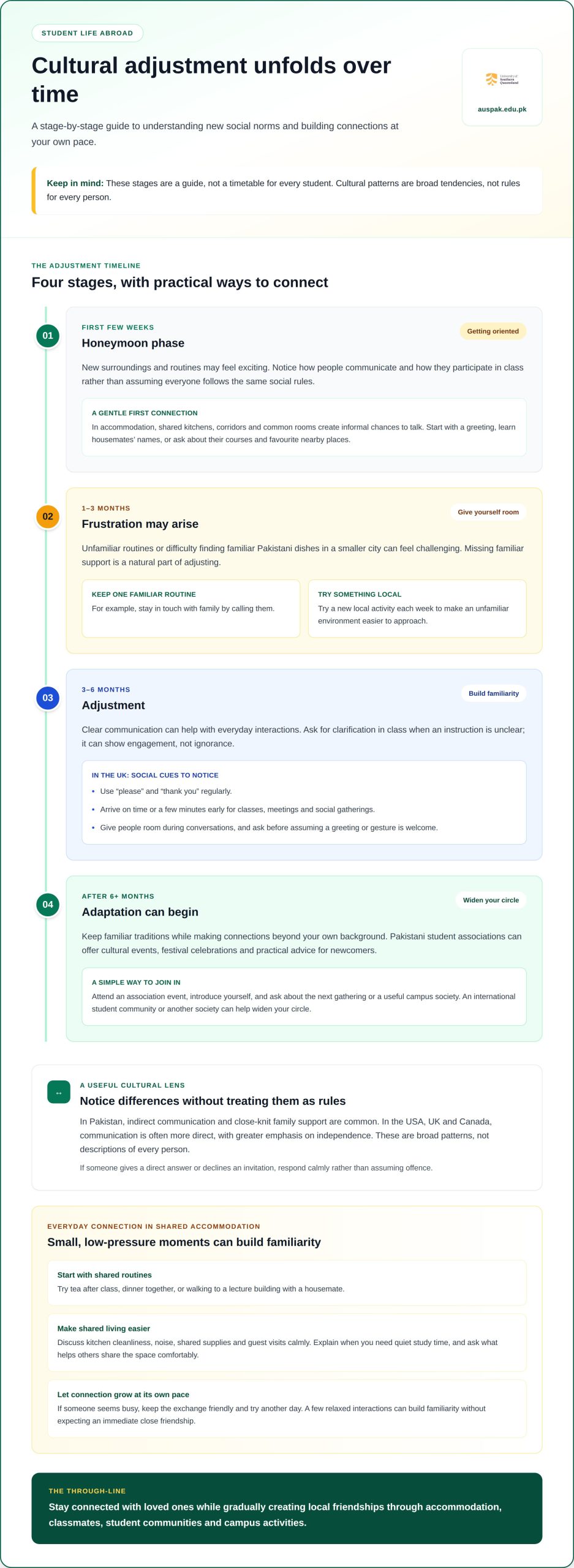
Culture shapes everyday conversations, classroom participation and expectations around personal space. In Pakistan, indirect communication and close-knit family support are common; in the USA, UK and Canada, communication is often more direct, with greater emphasis on independence. These are broad patterns, not rules for every person. For Pakistani students building a social life abroad, noticing how people communicate is a useful first step. If a classmate gives a direct answer or declines an invitation, respond calmly rather than assuming offence.
Culture shock can unfold in stages: the honeymoon phase may last the first few weeks, frustration may occur at 1-3 months, adjustment at 3-6 months, and adaptation can begin after 6+ months. These periods are a guide, not a timetable for every student. During frustration, unfamiliar routines or difficulty finding familiar Pakistani dishes in a smaller city may feel especially challenging. Keep one familiar routine, such as calling family, while trying a new local activity each week. That balance can make an unfamiliar environment easier to approach.
In the UK, use “please” and “thank you” regularly, and arrive on time or a few minutes early for classes, meetings and social gatherings. Punctuality is valued in many Western academic and social settings, while lateness may be viewed as disrespectful. People may also prefer more physical distance during conversations. Give others room, and ask before assuming a greeting or gesture will be welcome. In class, asking for clarification can show engagement rather than ignorance, so speak up when an instruction is unclear.
Pakistani student associations at major universities can offer a familiar starting point. They organise cultural events, celebrate festivals, share practical advice and help newcomers settle in. Attend an event, introduce yourself to someone, then ask about the next gathering or a useful campus society. These connections can support cultural adjustment while helping you meet people beyond your own background. Joining an international student community or another society can widen your circle without requiring you to abandon familiar traditions.
To find student events and city meetups, start with your university’s event calendar, student societies and Pakistani student association. These are practical places to find festival celebrations, cultural activities and opportunities to meet fellow students. Ask association members which events welcome newcomers, then choose one that suits your interests and schedule.
There is no single budget for social activities, events and nights out abroad. Costs depend on the city, transport, venue and whether an event is free or ticketed. Set a personal limit and prioritise university society activities or cultural events that fit it. A smaller plan, such as attending a campus gathering and sharing a meal with new friends, can create meaningful connections without making expensive nights out the centre of student life.
2. Hostel life and informal campus community
At a UK university, on-campus accommodation can help international students make connections. Shared kitchens, corridors and common rooms create natural opportunities to speak between classes. A brief introduction while making tea can become a regular conversation over dinner. These everyday encounters often feel less formal than approaching a large campus event. Start with a simple greeting, then learn your housemates’ names and ask about their courses or favourite places nearby.
Shared living brings different routines into close contact. One student may prefer quiet evenings, while another enjoys group meals or late conversations. Agreeing on practical expectations early can prevent small misunderstandings from becoming personal conflicts. Discuss kitchen cleanliness, noise, shared supplies and guest visits calmly. If your accommodation has a resident adviser or designated support contact, ask how house rules are handled.
Make communal spaces part of your weekly routine. For example, prepare a familiar Pakistani dish in the shared kitchen and invite housemates to try it, while showing interest in the food they make. If cooking together feels too ambitious, suggest tea after class or offer to share a table at dinner. These simple invitations make it easier for others to respond without pressure. Respect dietary needs and personal boundaries when planning shared meals.
Hostel friendships can grow through practical cooperation as well as social plans. Ask a neighbour how they organise laundry, find the nearest grocery shop together, or walk to a lecture building with a housemate. These small tasks give conversations a natural focus. If someone seems busy, keep the exchange friendly and try again another day. A few relaxed interactions can build familiarity without expecting an immediate close friendship.
Living with students from different countries can introduce you to perspectives beyond your own. Listen before comparing customs, and explain your preferences clearly when household routines differ. For instance, tell housemates when you need quiet study time, then ask what helps them share the space comfortably. A respectful conversation about boundaries is more useful than relying on assumptions. Keep friendships beyond your accommodation, too, through classmates and university societies.
Before moving in, read the accommodation guidance and note shared facilities, rules and support contacts. After arrival, introduce yourself to nearby residents and attend any welcome meeting offered by your residence. These steps help you understand how the building works and where conversations can begin. If you’re planning the wider transition to student life abroad, explore study-abroad arrival planning as part of your preparation.
3. Meeting people through university events and activities
University events give you a shared activity to focus on, making first conversations easier. Start with your university’s welcome programme, society fair or course meet-up. Rather than trying to meet everyone, introduce yourself to one person and ask what brought them to the event. If a society interests you, attend a regular meeting as well as its larger functions. Familiar faces make it easier to continue a conversation next time.
Choose activities that match your interests, not only events designed for international students. A photography group, debating society, sports session or volunteering project can bring together classmates from different courses and backgrounds. At a university function, offer to help set up chairs or welcome attendees; a shared task gives you an easy opening line. After the event, ask someone which activity they plan to attend next.
Use the university events calendar, student union announcements and society noticeboards to find activities. Course group messages can also alert you to informal gatherings, such as a study session or campus performance. Save events that fit your timetable, then choose one to attend. If you feel unsure about arriving alone, message the organiser with a practical question about the location or format.
Affordable social activities don’t have to involve a ticket or a night out. Look for free campus talks, society meetings, cultural celebrations and outdoor gatherings. You could also invite classmates to explore a public park, visit a university exhibition or study together in the library. In a new city, a walk through a central area can help you learn local routes while spending time with other students.
In the UK, Pakistani students may work up to 20 hours a week during the academic year. Student visa holders’ permitted work depends on what they study and whether work takes place in or out of term-time. Social attendance is different from paid work; volunteering or placements may involve separate considerations, so follow the conditions attached to your permission.
Make each event easier to build on. Exchange names, ask about someone’s course or interests, and suggest a specific next step, such as attending another society meeting together. If you meet someone at a cultural event, invite them to a campus talk or sports activity that reflects a different interest. Exploring the city with a small group can turn a one-time introduction into a more regular connection.
4. Building a social life and making friends
Friendship grows through repeated contact, not one perfect introduction. Choose a regular activity, such as a weekly society meeting or study group, and return consistently. Start conversations with specific questions about a course, shared interest or campus routine. If someone mentions a film, sport or local café, follow up by suggesting a simple plan. For students experiencing social anxiety or finding new social cues challenging, evidence-based support from Social Skills Australia can provide structured tools to build conversational confidence. Familiarity gives both people room to decide whether they want to stay in touch.
Pakistani student associations can connect you with people who understand the move abroad. Ask members for first-hand advice about settling in, then build friendships beyond the association too. Current students and alumni may share practical tips about neighbourhoods, campus routines and finding familiar groceries. International student communities can also recommend halal restaurants, grocery stores and ways to cook familiar dishes. Treat recommendations as conversation starters, not a reason to limit your circle.
Make the first meeting straightforward and comfortable. Choose a public place, such as a campus café or library, and tell someone you trust where you’ll be. When meeting a new acquaintance, keep your own transport and an easy way to leave. Trust your instincts if a plan or interaction feels uncomfortable, and decline without pressure. These practical habits let you focus on getting to know someone while keeping control of your plans.
Balance begins with a calendar. At the start of each week, block out classes, study time, work commitments and family calls before arranging social plans. Student visa holders may be able to work, but permitted hours depend on what they study and whether work occurs in or out of term-time. Keep social activities within your available time, and avoid sacrificing essential study or rest for every invitation. A short coffee after class can fit more easily than an unplanned late evening.
Family expectations can remain important as you develop independence abroad. Agree on a regular time for video calls, then protect time for local friendships and coursework. Sharing a clear routine with family can make it easier to explain your plans, such as attending a society meeting after lectures. If family responsibilities change during exams, adjust your social schedule rather than abandoning connections completely.
Friendships also need follow-through. After a useful conversation, send a brief message thanking the person and suggest one specific next step, such as lunch after class or a shared visit to a grocery store. If they’re unavailable, suggest another time without assuming rejection. Keep reaching out to different people, including classmates, association members and neighbours, so your support network grows through more than one connection.
5. Building relationships with professors and peers
Classroom relationships often begin with participation. In many Western classrooms, students are encouraged to join discussions, ask questions and respectfully challenge ideas. Prepare one relevant comment before a seminar, or ask for clarification when a concept remains unclear. Respond to classmates’ points before adding your own perspective. This shows you’re listening and helps turn a lesson into a genuine exchange.
Approach professors with a clear purpose. After class, introduce yourself and ask a focused question about the lecture, reading or assignment. For example, explain which argument you found difficult, then ask how it connects to the next topic. If you send an email, use a specific subject line and keep the message concise. A thoughtful question is easier to answer than a broad request for general help.
Follow up on useful conversations. If a professor suggests a chapter or research direction, read it and mention what you learned during a later discussion. This creates continuity without expecting an instant personal connection. Use the communication channels your course provides, and keep messages respectful and professional. If you’re unsure about an assignment instruction, ask early enough to use the reply before submission.
Peer relationships benefit from the same consistency. In a group project, agree on responsibilities, communication methods and a meeting time before work begins. Share notes when a classmate misses a key point, and ask to compare interpretations after a lecture. These practical exchanges can lead to study partnerships and friendships. Make space for different working styles by listening first and agreeing on clear next steps.
Group discussions can feel unfamiliar if you’re used to a more indirect communication style. State your view clearly, then invite others to respond: “I read this point differently. What do you think?” A respectful disagreement is about the idea, not the person. If classmates speak quickly, note your thought and join when there’s a pause. You don’t need to dominate the discussion to contribute meaningfully.
Build trust through small, dependable actions. Arrive prepared for a meeting, complete your agreed part of a group task, and thank classmates who share helpful feedback. When a professor offers guidance, apply it and explain how it improved your next draft. These habits make future conversations easier and show respect for other people’s time. If you’re preparing for study abroad, plan your international study journey with support suited to your destination.
transition with patience: cultural adjustment is a normal part of studying abroad, and connecting early with an international student community or student societies can help ease the transition. Pakistani students studying abroad can connect with current students, alumni, or Pakistani student associations for first-hand advice about settling in.
Take part in extracurricular activities, attend university functions and explore the city to help build relationships. Pakistani students in the UK can use video chats and social media to stay in touch with loved ones for emotional support. English is the primary medium of instruction at most Pakistani universities, helping international students with the academic transition. In Pakistan, learning some Urdu or the regional language spoken in their city can help with day-to-day social life, although it is not required for coursework.
AusPak International: UK Student Visa Consultancy
AusPak International helps Pakistani students prepare for the study-abroad process through UK Student Visa Consultancy, Australian University Admission Support and Canada Study Permit Assistance. If the UK is your destination, visa guidance is a practical next step as you plan for academic life, accommodation and the relationships you hope to build. Onshore Arrival Support can also help students prepare for settling into their destination. These services support your education journey; campus societies, classmates and university events are where you can develop your social connections. For guidance on your next steps, contact AusPak International.
Take your next step with confidence
Building a social life as a Pakistani student abroad is not about changing who you are. It’s about creating space for new relationships while keeping the values and connections that matter to you. Before departure, decide what you want your first weeks to include: time to settle, regular contact with family and opportunities to meet people through campus life. A simple intention, such as speaking with one new person at an activity, can turn a large transition into a manageable personal goal.
Your study plans and social life are connected. As you prepare for the move, consider the academic and practical steps that will help you arrive ready to participate. AusPak International supports students with study-abroad planning for destinations including the UK, Australia and Canada.
Contact AusPak International to discuss your next step. Every new connection starts somewhere, and you can begin shaping that experience now.
Frequently Asked Questions
How can Pakistani students make friends and build a social life abroad?
Building a social life as a Pakistani student abroad can start with one familiar routine and one new connection. Ask a lab partner or classmate to compare notes after a lecture, then follow up with a message about a topic you discussed. Suggest a specific, manageable plan, such as reviewing course material before class. Repeated contact gives a new acquaintance a natural way to become a friend.
What student clubs, societies, and cultural groups are available for Pakistani students abroad?
Options can include Pakistani or South Asian student associations, Islamic societies, academic groups, professional networks, sports clubs and arts societies. The exact selection depends on the university. Look through its student union directory and society listings, then ask a society representative what members do during a typical meeting. If a group combines cultural events with practical support, it may help you connect socially and learn about campus life.
How can Pakistani students find local Pakistani and South Asian communities abroad?
Begin with the university’s international student office, student union and alumni networks; ask whether they share details of Pakistani or South Asian groups. Search community pages on social platforms using your city and university names, and favour groups with clear organisers and active discussions. A classmate or alumnus can also point you towards local cultural events. Attend an organised gathering first, then decide which communities feel like a good fit.
How can Pakistani students overcome homesickness, culture shock, and language barriers abroad?
Set a steady routine that includes sleep, meals, study and contact with family, then make one manageable social plan. For language challenges, write down unfamiliar expressions from lectures or everyday conversations and practise them with a trusted classmate. Ask speakers to repeat or rephrase instead of pretending you understood. If homesickness begins affecting daily tasks or study, speak with a university wellbeing or counselling service.