
Settling in Australia takes more than arriving on campus: onshore support services for international students in Australia can include help with health, safety and wellbeing, academic and English-language support, and specialist assistance. Support is available through Australian, state and territory governments and education providers, while many institutions also offer tutoring and workshops.
It’s reasonable to want clear guidance at every stage, especially when you’re adjusting to a new study environment and deciding where to turn for help. The right support can differ before departure, after arrival and during your studies, so it helps to understand who provides what.
This guide explains the main support options and how they relate to pre-departure planning, settling in, job events, migration guidance and student feedback. You’ll see where education providers’ support fits, what to consider when concerns arise, and how feedback can help students raise issues during their Australian study experience.
Key Takeaways
- Identify which support can come from Australian education providers and governments, and where academic, wellbeing and specialist help fits.
- Understand how pre-departure preparation and post-arrival orientation can make the transition to study and daily life more manageable.
- Explore how settling-in and job-related events can help students build connections and learn about employment opportunities.
- Know how student feedback, counselling and disability support can contribute to a more supported study experience.
- Find out how to access emergency and after-hours help, including the Australian Government’s International Student Hotline.
What types of support services are available for international students?
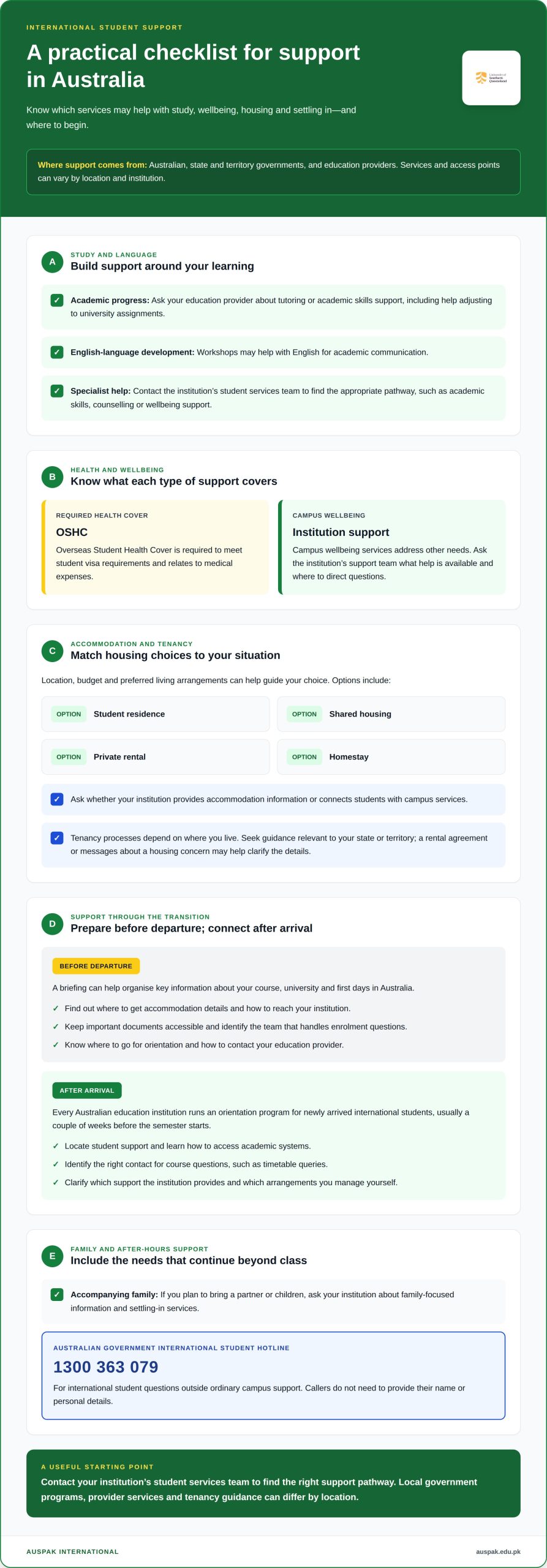
International students can access help through Australian, state and territory governments and education providers. Support can cover health, safety, wellbeing and study needs, including for students preparing to study in Australia. The range of onshore support services for international students in Australia varies by location and institution, as governments and providers organise their own programs and access points.
Education providers can support academic progress and English-language development through tutoring and workshops. For example, a student adjusting to university assignments can ask about academic tutoring, while an English-language workshop can help with academic communication. Specialist support may also be available during study. Contact the institution’s student services team to find the appropriate pathway, such as academic skills, counselling or wellbeing support.
Accommodation options include student residences, shared housing, private rentals and homestays. Location, budget and preferred living arrangements help determine what suits each student. Some institutions provide accommodation information or connect students with campus services. For tenancy questions, support can help identify the relevant state or territory advice service and clarify which details matter, such as a rental agreement or messages about a housing concern.
Australian laws protect international students and support a positive study experience. Accommodation and tenancy processes depend on where a student lives, so relevant support should reflect the state or territory. Government programs and education-provider services can therefore vary between locations. Students can start with their institution’s support team to find the appropriate local guidance.
Health cover is essential. International students in Australia must have Overseas Student Health Cover (OSHC) to meet student visa requirements. OSHC relates to medical expenses, while campus wellbeing services address other needs. For example, a student with a health concern can contact the institution’s support team to learn what campus help is available and where to direct questions about their cover.
Some universities and colleges also support accompanying family members. Students planning to bring a partner or children can ask their institution about family-focused information and settling-in services. Including these needs in education planning helps recognise that moving to Australia can affect the whole family.
- For study: Ask about tutoring, English-language workshops or specialist support through the education provider.
- For accommodation: Consider residences, shared housing, rentals or homestays, and seek location-relevant tenancy guidance.
- For health and wellbeing: Maintain required OSHC and identify the institution’s student support contact.
- For family needs: Ask the institution about services for accompanying family members.
Onshore support services for international students in Australia can connect education, wellbeing and practical living needs. Students considering a skilled career pathway can also discuss study options with their institution, while keeping academic support, accommodation and health cover in view.
Services are not uniform across Australia: government programs, education-provider services and access points vary by location and institution. Tenancy guidance also depends on the state or territory where a student lives, while institutions may offer academic, wellbeing, accommodation and family support.
Pre-departure briefings and post-arrival help
Preparation works best in stages: clarify study arrangements before departure, then connect with university services after arrival. Every Australian education institution runs an orientation program for newly arrived international students, usually a couple of weeks before the semester starts.
Arrival Assistance
Before travelling, a briefing can help students organise key information about their course, university and first days in Australia. Useful topics include where to find accommodation details, how to reach the institution, which documents to keep accessible and which campus team handles enrolment questions. This turns broad plans into practical steps, such as knowing where to go for orientation and how to contact the education provider.
On arrival, orientation gives students a structured introduction to campus services and study expectations. Use the program to locate student support, learn how to access academic systems and identify the right contact for course questions. For example, a student unsure about their timetable can ask the relevant university team rather than relying on informal advice. Arrival guidance should also clarify which support the institution provides and which arrangements students manage themselves.
Ongoing and After-Hours Support
Support needs can continue after orientation. Students may need guidance on course processes, campus wellbeing services or settling into a new routine, so it helps to know the institution’s contact points and how to raise a concern. Keep key messages and enrolment information accessible to make it easier to explain an issue and direct it to the appropriate team.
For international student questions outside ordinary campus support, the Australian Government’s International Student Hotline is 1300 363 079. Callers don’t need to provide their name or personal details. This gives students an option for seeking information when they need guidance beyond their education provider’s available support. For urgent concerns, distinguish the immediate issue from longer-term study or accommodation questions so the request reaches the right service.
Make pre-departure advice useful by connecting each topic to a decision or next step. A student still arranging travel can clarify arrival plans; someone who has chosen a course can prepare questions for orientation. University programs can also introduce students to staff and peers, helping newcomers learn where to find information as the semester begins.
After arrival, ongoing support should be relevant to the student’s situation, not limited to a single welcome session. A clear process helps: identify the concern, approach the relevant campus contact, and explain what guidance is needed. For questions about arrival arrangements, arrival planning support can help connect pre-departure preparation with the transition to study in Australia.
Events for settling in Australia and finding jobs
Events can help international students build local connections while studying in Australia and explore career opportunities. University orientation, student clubs, career sessions and employer presentations each serve a different purpose. Choose events based on your immediate need, whether that’s meeting classmates, understanding campus life or learning about potential work.
Use events to build local connections
Student clubs and associations help students find communities connected to their interests, backgrounds or fields of study. For example, joining a subject-related association can help a student meet peers and learn how they approach coursework and campus life. Universities and other education providers may share information about clubs and associations through student services or campus communications.
Settling-in events can also introduce useful campus contacts. At an institution’s orientation or student event, find out where to direct questions about study, wellbeing or student activities. A short conversation with a student group can help you identify events suited to new arrivals. Treat attendance as a first connection, then follow up through the group’s usual communication channel.
Make career events useful
Career fairs, employer presentations and career workshops can help students understand roles, recruitment processes and the skills employers value. Attend with a clear aim: learn about an industry, hear how a role works or practise explaining relevant course experience. For example, a business student might ask an employer about the entry-level responsibilities involved in a graduate role.
Before attending, prepare a brief introduction covering your course, interests and the kind of opportunity you’re exploring. Ask focused questions rather than requesting a job on the spot. After a presentation, note the organisation’s name and any next steps mentioned. A concise follow-up message can refer to a specific discussion point and keep the connection professional.
Career events provide information and contacts, not a promise of employment. Use them to understand opportunities and identify skills to develop through your education. Course choices also matter: aligning a course with skilled occupation lists can improve long-term migration and career opportunities, though conversations at events should not be treated as migration advice.
Keep practical preparation in mind. A student considering a role can use a career workshop to review a résumé, practise interview answers or clarify how to describe project experience. Event discussions can help identify the skills employers emphasise and guide future questions for careers staff. Providers may offer different event formats, so campus notices and student communications are useful starting points.
After an event, record useful contacts, advice and follow-up actions. Separate career information from course or visa questions, which may need guidance through the appropriate education or migration support channel. This review turns a one-off event into a clearer plan for settling in, studying and exploring work opportunities.
International student feedback and support
Feedback matters because a student’s experience includes more than classes. Australian education institutions offering education to international students are required by law to provide support services that help students study and adapt to their new home. This makes the institution a key place to raise concerns about academic access, campus services or adjusting to a different culture.
If you suspect a scam, contact the education provider’s student support team and follow its established reporting process. Keep relevant messages or records to explain what happened, and avoid sharing further personal information with the suspicious contact.
Most Australian institutions have qualified and experienced counsellors who offer free, confidential advice on personal, social and academic matters. A student struggling with homesickness, a difficult class or social adjustment can approach counselling for guidance. Confidentiality can make it easier to discuss a concern, while the issue itself can help determine whether counselling or another campus service is the right first step. For individuals who require specialized clinical assessments or intensive care beyond routine campus counselling, services such as Pand Health provide comprehensive evaluations and treatment for complex needs like thought disorders and autism.
Give feedback clearly and specifically. Describe the issue, when it occurred and how it affected your studies. For example, a student having difficulty accessing course materials can explain which resources are affected and what support would help. This helps the institution understand the concern and direct it to the relevant team. Ask how to submit feedback and which process applies.
Students with disabilities have rights and access to support services in Australia’s education and training system. Contact the institution’s disability or accessibility support team to discuss barriers to participation, such as difficulty accessing learning materials. Describing the specific study activity affected helps the team understand what support is needed. You can also raise concerns if an adjustment isn’t working as intended.
Changing courses or providers can raise separate questions. International students may change courses or institutions if they follow student visa conditions and obtain the required approvals. A change may require an updated Confirmation of Enrolment (CoE), and a new visa may sometimes be needed depending on the course level. Raise these questions with the institution’s international student support team before acting, keeping feedback about a course concern separate from visa-related steps.
Student visa rules changed on 2 October 2026, including rules concerning family members, onshore applications and provider transfers. If a concern involves a possible transfer, ask the education provider which support team can explain the institution’s process and where visa-related guidance fits. Keeping the issue specific helps prevent a course complaint from being confused with a request about migration options.
For concerns that need guidance beyond campus services, students can call the Australian Government’s International Student Hotline on 1300 363 079. Callers don’t need to provide their name or personal details. The key takeaway: report concerns through a relevant institution channel, describe the issue clearly, and use the hotline when broader student support is needed.
How can onshore support services help international students access emergency and after-hours support in Australia?
First distinguish an immediate safety risk from a student services question. In an emergency, use the appropriate local emergency response channel. For study-related concerns, contact the education provider’s support team or the Australian Government’s International Student Hotline.
The hotline number is 1300 363 079. International students can call with questions, and callers don’t need to provide their name or personal details. This may help a student seek information about a concern without sharing identifying information during the call.
Choose the right support route
For a campus concern after hours, use the contact details the institution provides for student support or urgent assistance. A student facing a wellbeing concern, for example, can explain what is happening and ask which service can respond. Keep the issue clear and brief, especially if the usual campus office is closed.
If there is an immediate threat to personal safety, contact the local emergency response service rather than waiting for routine university support. The International Student Hotline provides information for international students, but it is not a substitute for an emergency response. Distinguishing urgent danger from non-emergency questions helps direct each concern appropriately.
Prepare key details before contacting support
When contacting an education provider, describe the situation, where it occurred and what help you need. For example, a student who feels unsafe in student accommodation can say whether there is an immediate threat and ask for the institution’s relevant support contact. Keep essential details accessible, such as the campus name and student identification information, but share personal details only through an appropriate channel.
If you suspect a scam, preserve relevant messages and explain what happened to the institution’s student support team. Don’t send further personal or payment information to the suspicious contact. The hotline can also provide information without callers giving their names or personal details.
Plan how to access support after hours before a problem arises. Save the International Student Hotline number, locate the education provider’s published support contacts and note how the institution directs urgent concerns outside normal office hours. These details can be particularly useful during weekends, semester breaks or late at night, when a familiar campus office may be closed.
After immediate needs are addressed, follow up with the relevant university team about ongoing wellbeing, accommodation or study impacts. Keep a short record of whom you contacted and any next steps, so the concern can be explained consistently. For arrival-related guidance that supports preparation before settling in, explore onshore arrival support.
AusPak International: Australian University Admission Support
AusPak International supports students planning to study in Australia through Australian University Admission Support and Onshore Arrival Support. Turn to admission support for guidance with the university application process, and use arrival support as you prepare to settle in Australia.
These services connect the study decision with the transition that follows. Consider course and institution choices first, then the practical support needed for arrival. AusPak International also provides UK Student Visa Consultancy and Canada Study Permit Assistance for students considering those destinations.
For guidance on Australian university admission or arrival planning, contact AusPak International.
Take the next step towards studying in Australia
Your next step is to turn a broad study plan into decisions that fit your course, destination and arrival needs. The right onshore support services for international students in Australia can connect preparation with the transition to campus, while your education provider remains an important source of support once you’re enrolled.
For students planning their next step, AusPak International offers Australian University Admission Support and Onshore Arrival Support. It also provides UK Student Visa Consultancy and Canada Study Permit Assistance for students considering those destinations. Choose the guidance that matches your plans and identify what needs attention first.
Start a conversation about your study plans and the support you need. Contact AusPak International to discuss your next step, and approach your international study journey with confidence.
Frequently Asked Questions
What onshore support services are available to international students in Australia?
Support can cover academic progress, English-language development, wellbeing, accommodation information, student activities and specialist needs. The practical route depends on the issue: a question about course materials belongs with an academic support team, while difficulty adjusting socially may be better addressed through counselling. Students who haven’t arrived can also seek pre-departure guidance. If a concern affects study and daily life, contact the relevant education provider and explain what kind of help you need.
What support is available for international students in Australia, including counselling, health and academic support?
Education providers can connect students with counselling, academic assistance and wellbeing services. For example, a student struggling with coursework can ask about tutoring, while someone dealing with personal stress can seek a confidential counselling appointment. Health cover is a separate essential: international students must hold Overseas Student Health Cover to meet student visa requirements. Ask the institution which team can explain its services and how to access them.
Where can international students in Australia get help with visa conditions, work rights and migration advice?
For questions about how a course or institution change may affect your study arrangements, start with the education provider’s international student support team. Visa conditions and work rights are personal matters, so seek advice from a qualified migration professional before making decisions based on informal guidance. AusPak International offers Australian University Admission Support for application-related needs, as well as UK Student Visa Consultancy and Canada Study Permit Assistance for those destinations.