
A strong networking conversation starts with curiosity, not a request for a job. For Pakistani students, networking opportunities for international students can begin with a brief introduction to their studies and goals, followed by a genuine question about an alum’s career path or a professional’s work. Listen closely, look for shared interests, and follow up with a thoughtful message after the event.
It’s understandable to feel unsure about approaching someone new, especially when cultural expectations or language differences add pressure. You don’t need a perfect speech. A clear introduction and respectful interest can help the conversation feel more natural.
This guide explains how to approach alumni and professionals, connect across cultures, and build relationships that may offer industry insight, mentorship, or leads on opportunities. You’ll also learn where to find events in Pakistan and how to stay in touch after meeting someone.
Key Takeaways
- Prepare a concise introduction and approach alumni or professionals with a genuine question about their work or career path.
- Use university alumni networks, professional associations, campus events, and virtual meetings to make relevant connections.
- Build rapport with internationally experienced contacts by showing interest in their perspectives and following up thoughtfully.
- Networking can offer industry insight, mentorship, and awareness of opportunities, while also strengthening cross-cultural communication.
- Make conversations across language and cultural differences more comfortable by communicating clearly, patiently, and respectfully.
1. How do I approach alumni or professionals at events?
In Pakistan, networking opportunities for international students include campus career fairs, networking events, clubs, conferences, and industry meetups. Eventbrite and Meetup can help you find local events, while university announcements and academic departments may share campus opportunities. Look for gatherings related to your subject, such as a technology seminar for computing students or a business conference for management students. Choose an event where the topic gives you a natural conversation starter.
Useful online platforms include LinkedIn, Facebook, X, Instagram, and industry-specific forums. To connect with alumni, start with your university’s alumni network and search for graduates working in your intended career field or destination abroad. LinkedIn groups and shared university affiliations can help you identify relevant contacts. These networking opportunities for international students make it easier to find alumni whose experience relates to your goals.
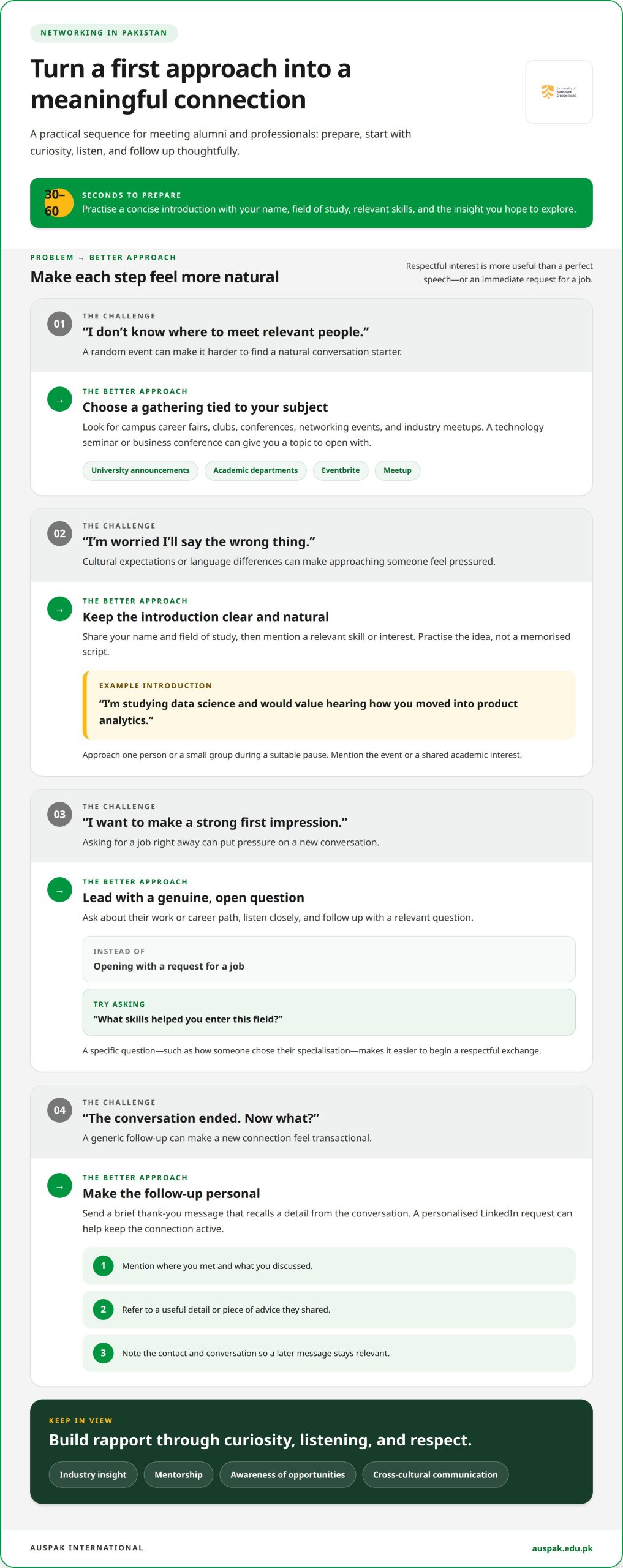
Prepare before entering the room. Practise a 30-to-60-second introduction that states your name, field of study, relevant skills, and the insight or opportunity you hope to explore. For example: “I’m studying data science and would value hearing how you moved into product analytics.” Keep the wording natural, rather than reciting a memorised script.
Approach one person or a small group during a suitable pause. Introduce yourself, mention the event or a shared academic interest, then ask an open question about their work. “What skills helped you enter this field?” invites a more useful exchange than an immediate request for a job. Listen to the answer and ask a relevant follow-up.
Alumni can offer practical industry insight, mentorship, and perspectives on working abroad. Use your university’s alumni network to find graduates whose career paths connect with your goals. A specific request, such as asking how they chose their specialisation, makes it easier to start a conversation. Treat mentorship as a relationship built through respectful exchanges, not an immediate obligation.
Professional associations can extend your connections beyond campus. Look for associations in your field that offer student memberships, then attend their seminars or networking events. Before joining a conversation, read the event description and identify a topic you can discuss. Asking about a recent project or industry challenge gives professionals a clear reason to engage.
Professors and academic advisers can also introduce students to relevant alumni or employers. Ask about an industry speaker, department event, or graduate working in your area of interest. Explain what you hope to learn, such as how a particular role uses your academic skills. A focused request is easier to answer than a broad request for career help.
After meeting someone, send a brief thank-you message that recalls a detail from your conversation. A personalised LinkedIn request can keep the connection active. Note where you met and what you discussed so your next message feels relevant rather than transactional.
2. Connecting with internationally experienced contacts
Look beyond job titles when identifying contacts with international experience. Alumni who studied abroad, professionals from Pakistan working in your intended destination, and people with experience in your home country can offer distinct perspectives. Choose someone whose path relates to your plans, then identify what you want to learn. A specific interest, such as adapting a Pakistani engineering degree to a new market, gives the conversation a clear focus.
Professors and academic advisors can help you understand how your studies connect with international careers. Ask an instructor about a conference speaker, research project, or graduate working in your area. Explain the connection you hope to make and the question you want answered. For example, a student interested in public health might ask an advisor which alumni understand health policy across different countries.
Use LinkedIn to research a contact’s career journey before sending a request. Review their profile, recent posts, and shared university or professional groups. Mention a relevant detail in your personalised message, such as an article they shared about your field. A brief note explaining your academic interest and the insight you hope to gain feels more genuine than a blank request.
Start by seeking perspective, not employment. Ask a contact with international experience which skills their field values, how their organisation is changing, or what recent graduates should understand. You might ask a marketing professional about adapting campaigns for different audiences, or ask for recommendations for a useful industry newsletter. Open questions invite informed answers without putting pressure on the contact.
For a virtual meeting, consider the other person’s time zone before proposing a time. A time-zone tool can help you offer suitable options rather than assuming their working hours match yours. If schedules don’t align, suggest email as a first step. Before a video call, test your camera and microphone, choose a quiet background, and prepare as you would for an in-person discussion.
After the meeting, send a specific thank-you message within 24 to 48 hours. Refer to an idea they shared, then explain briefly how you’ll use it. Keep a simple record of the contact, meeting date, key advice, and next follow-up. This makes future messages more personal and helps you maintain relationships regularly, rather than appearing only when you need assistance.
Build a genuine professional relationship by sharing relevant information, joining a useful LinkedIn discussion, or offering support when appropriate. If international study is part of your career plan, Australian university admission support can help with the admissions step while you develop global connections.
Build genuine professional relationships by staying in touch. Add contacts on LinkedIn, keep track of their details and earlier conversations, and send updates about new experience or questions. Conferences, seminars, and webinars related to your academic or professional interests offer more opportunities to meet people.
Social media and professional platforms such as LinkedIn, Twitter, and industry-specific forums can connect you with professionals worldwide. LinkedIn groups, relevant articles, and shared connections can help broaden your network. Virtual networking makes global conversations possible and may lead to remote internships. Use tools that track multiple time zones and suggest meeting times considerately.
3. Benefits of networking for international students
In Pakistan, event attendance, volunteering, and paid work are distinct activities. Don’t assume permission for one covers another. Review your visa conditions and university guidance before accepting a volunteer or paid role.
University clubs and student organisations offer starting points for meeting peers and finding campus activities. In major Pakistani cities, check university event notices and student groups for professional or cultural gatherings. These connections can introduce you to classmates studying different subjects, local communities, and people familiar with your intended career.
A useful conversation can reveal internships, mentorship, and job leads that aren’t publicly advertised. An alum working in finance, for example, may explain which skills employers value, while a conference speaker might describe an upcoming project. Treat contacts as sources of insight, not as a promise of employment. Ask what experience, coursework, or practical skills could strengthen your next application.
Professional discussions also help you understand how an industry works beyond academic study. A conversation with someone in software, for instance, can clarify how teams use research, communication, and technical skills. Ask about current challenges or company culture, then compare their answers with what you’ve learned in class. These details can help you make informed choices about electives, projects, and career goals.
Cross-cultural connections give you practice communicating with people who may have different expectations. At a campus event, notice how participants take turns, introduce themselves, and exchange contact details. Adapting your approach respectfully can strengthen cross-cultural communication and help you collaborate with classmates, employers, and future colleagues. These skills matter in global workplaces, where clear communication supports teamwork across backgrounds.
A professional profile can make conversations easier to continue. Keep your LinkedIn details current, including your field of study, relevant projects, and demonstrable skills. Share a useful article from your industry or comment thoughtfully on a professional discussion. A clear profile helps new contacts understand your interests without a long explanation during a brief meeting.
Protect yourself while building connections. Before pursuing a job or internship, look for a clear role description and verify the organisation through its official channels. Don’t pay an individual to secure a job, send sensitive documents to an unverified contact, or attend a private meeting alone. For an in-person meeting, choose a public campus or professional venue and tell someone you trust where you’ll be.
After each event, note one useful insight and one action to take, such as developing a skill or exploring a project. This turns conversations into practical decisions. Reviewing your notes alongside your academic goals helps you decide which relationships to nurture and where to focus your professional development.
4. Networking challenges across cultures and languages
At a campus networking event, language differences can make quick introductions harder. Prepare a plain-language introduction about your course, interests, and goals. For example, “I’m studying economics and exploring careers in development” gives others an easy starting point. Speak clearly, pause between ideas, and ask someone to repeat or rephrase a point when needed.
Accent differences can affect how easily people understand each other, even when everyone speaks English. Choose familiar words over idioms, and check understanding with a specific question. If a professional mentions an unfamiliar term, ask what it means in their role. Language classes can build confidence, while translation apps can help clarify a word before or after a conversation.
Cultural expectations may shape greetings, eye contact, personal space, and how directly people express opinions. Observe how others interact at the event, then follow their lead respectfully. A formal introduction may suit a faculty reception, while a student society gathering may feel more relaxed. Avoid treating one person’s behaviour as representative of an entire culture.
Busy networking events can create pressure to join groups or interrupt conversations. Look for a natural pause, introduce yourself, and connect your question to the event’s topic. If a group is discussing a panel on engineering, you might ask what skills its speakers highlighted. When someone seems occupied, thank them and make room for another exchange.
Social confidence often grows through manageable steps. Set a practical goal before attending, such as speaking with one guest speaker or asking a classmate to attend with you. Arrive early, when conversations may be easier to join, and use the event programme to identify topics you can discuss. These steps give you a clear focus without requiring a polished performance.
Virtual meetings bring different challenges. Background noise, unstable audio, and delayed responses can disrupt a conversation with a mentor abroad. Test your microphone and camera, choose a quiet setting, and allow the other person to finish speaking. If a connection drops, send a concise follow-up message that recaps the discussion and suggests continuing by email.
Following up can feel difficult when communication styles differ. Write a brief message that refers to a specific point, such as advice about a research project or industry skill. Keep the tone respectful and don’t expect an immediate reply. A thoughtful note gives the contact context and leaves space for them to respond when convenient.
Networking is a skill developed through practice, not a test of fluency or personality. After each event, note which questions opened conversation and where misunderstandings arose. Use that experience to adjust your approach at the next campus seminar, professional gathering, or online discussion.
5. What networking opportunities are available for international students in Pakistan?
International students in Pakistan can build connections through university clubs, student organisations, career fairs, and industry events. Start with campus announcements, department notices, and student groups, which often share talks or activities linked to specific subjects. A business student might attend an entrepreneurship session, while an engineering student could look for a technical seminar. Choose events that match your interests, not simply the largest gathering.
Local conferences and professional meetups offer another way to meet people working in your field. Eventbrite and Meetup can help you find industry-specific gatherings in Pakistan. Search by subject and location, then read the event description to understand its audience and format. A conference panel, for example, gives you a shared topic for speaking with attendees after the session.
Career fairs bring students into contact with employers and organisations. Check university career services and academic departments for notices, then review the participating organisations before attending. Prepare a short introduction linked to your course or project. If you’re interested in marketing, you could ask a representative how their team approaches campaigns for different audiences. Focus first on learning about the field and making a relevant connection.
Campus clubs and student organisations make it easier to meet peers through regular activities. Join a group tied to your academic subject, cultural interests, or community involvement. A study group can also become a natural place to discuss classmates’ career goals and share useful information. Contribute to a project or discussion. Consistent participation gives others a clearer sense of your interests and strengths.
Classmates, professors, and guest speakers can all become part of your professional network. Ask a classmate what career area they’re exploring, or speak with a guest after a lecture about a point from their presentation. Academic departments may announce seminars open to students beyond a single course. These conversations can reveal shared interests and lead to introductions within the university community.
Online, Facebook, X, and Instagram can help you follow professional organisations, event hosts, and industry discussions. Keep your profile professional, and use social channels to identify relevant talks or connect around shared interests. LinkedIn can support a more career-focused presence. A thoughtful comment on a post about your field gives you a specific opening for a future conversation.
Set a manageable routine: attend one networking event each month, then write down who you met and what you learned. Follow up with a personal message that refers to the discussion, rather than sending a generic greeting. If studying abroad is part of your plans, plan your next study steps alongside the professional connections you’re building.
International students can look for university clubs and student organisations, campus career fairs, industry events, local conferences, professional meetups, and seminars open to students beyond a single course. Campus announcements and department notices can help identify opportunities, while Eventbrite and Meetup can help you find gatherings by subject and location.
AusPak International: UK Student Visa Consultancy
AusPak International supports students planning to study in the UK with UK Student Visa Consultancy. Once you’ve explored academic and professional connections, visa guidance can help you understand the next steps in preparing to study abroad. Turn to this support when you’re moving from researching UK universities and career pathways to organising your student visa application.
For students considering other destinations, AusPak International also provides Australian University Admission Support and Canada Study Permit Assistance. Onshore Arrival Support can help students prepare for settling in after reaching their study destination. Choose the support that fits your plans, and keep building relationships with alumni, professors, and professionals as you prepare for the transition.
To discuss your study plans, contact AusPak International.
Turn professional conversations into your next step
Let each introduction support a larger goal. A useful professional connection can help you understand where your interests fit, while your study choices shape the direction you take next. Treat networking opportunities for international students as part of that wider journey: keep learning, stay open to different perspectives, and make decisions that reflect your ambitions.
As your plans develop, focus on practical steps toward studying abroad. AusPak International supports students with study pathways and related guidance, including Australian University Admission Support, UK Student Visa Consultancy, and Canada Study Permit Assistance. Choose the destination and next step that fit your plans.
Ready to discuss your study plans? Contact AusPak International today.
Take the next step with purpose. The relationships you build and the choices you make can help open a path toward your future.
Frequently Asked Questions
How do I approach alumni or professionals at events?
Make your opening relevant to the moment, then ask permission to continue the conversation. After a panel, mention a point from the speaker’s talk and ask how it connects with their current work. If they seem rushed, say you’d value following up by email or LinkedIn. This respects their time and gives your later message useful context. Keep the exchange focused on learning, not an immediate favour.
What is networking and why does it matter for students?
Networking means forming and maintaining professional relationships through useful, respectful exchanges. For students, it matters because classroom learning doesn’t always show how knowledge is used in workplaces. A peer discussion during a group project, for example, can introduce different approaches and help you practise explaining your ideas. Over time, these relationships create a community you can learn with, contribute to, and stay connected to as your goals evolve.