
Staying connected to home can strengthen, rather than interrupt, your experience abroad. Dealing with homesickness while studying abroad means making room for both familiar relationships and new ones: build friendships, connect with local communities, try new experiences, be patient with yourself, and share your time abroad with loved ones. You don’t have to choose between feeling close to home and becoming part of your host community.
Missing family, friends, familiar routines, or the comfort of home can happen even when you’re excited about your studies. These feelings don’t mean you made the wrong choice; they signal that you may need more support as you adjust.
These practical approaches can help you meet other students, explore your host country, and stay in touch with people who matter to you. They also make room for difficult days, without self-judgment, so connection can become part of your study-abroad routine.
Key Takeaways
- Start conversations with classmates and look for shared interests to build friendships at a comfortable pace.
- Create familiar routines and explore your host city gradually, choosing experiences that help you feel more at home.
- Find cultural or faith communities where you can connect with people who share meaningful parts of your background.
- Make room for mixed emotions and use simple reflection to respond to difficult days with greater self-kindness.
- Set a regular rhythm for calls, messages, or photos so loved ones can share in your experience while you stay engaged abroad.
1. Building friendships with other international students
A practical way of dealing with homesickness while studying abroad is to build connections in places you already spend time. Greet a classmate before a lecture, then ask if they’d like to get lunch afterward. Small invitations make conversation easier without putting pressure on either person. If you’re unsure what to say, ask about a course, a campus club, or something they’ve enjoyed discovering in their host country.
Look for other international students who understand the changes you’re experiencing. Suggest a shared meal where everyone brings a dish or a recipe from home. Familiar food can prompt stories about family, traditions, and memories, while offering a relaxed way to get to know one another. You could also invite a classmate to join a club or explore a local café.
Shared interests give friendships room to grow. If you enjoy drawing, running, music, or a sport, mention it to classmates and suggest a low-pressure activity. For example, invite someone to visit a campus art club or take a walk after class. Go more than once if the first meeting feels awkward. Trust takes time, so one quiet conversation doesn’t mean friendship isn’t possible.
Keep family and friends involved with a simple contact routine. Set a regular time for a call, then share smaller moments through messages or photos. A weekly video call gives you something familiar to look forward to, while pictures of a meal, campus event, or new view help loved ones follow your experience. Agree on a time that works across time zones and fits around classes and social activities.
Holidays, birthdays, and important family events can make the distance feel greater. Plan a call or exchange photos with relatives, and create a small celebration with new friends, perhaps by cooking a traditional dish together. You can honour a family memory while making room for your life abroad. If a call isn’t possible that day, send a thoughtful message and arrange another time to connect.
Staying in touch can be comforting, but constant calls may leave less time for friendships and activities where you are. Set aside time for family conversations, then put your phone away during a meal or club meeting. If distress becomes hard to manage or isolation feels overwhelming, seek support through your school’s counselling service or a local professional.
2. Making the most of study-abroad experiences
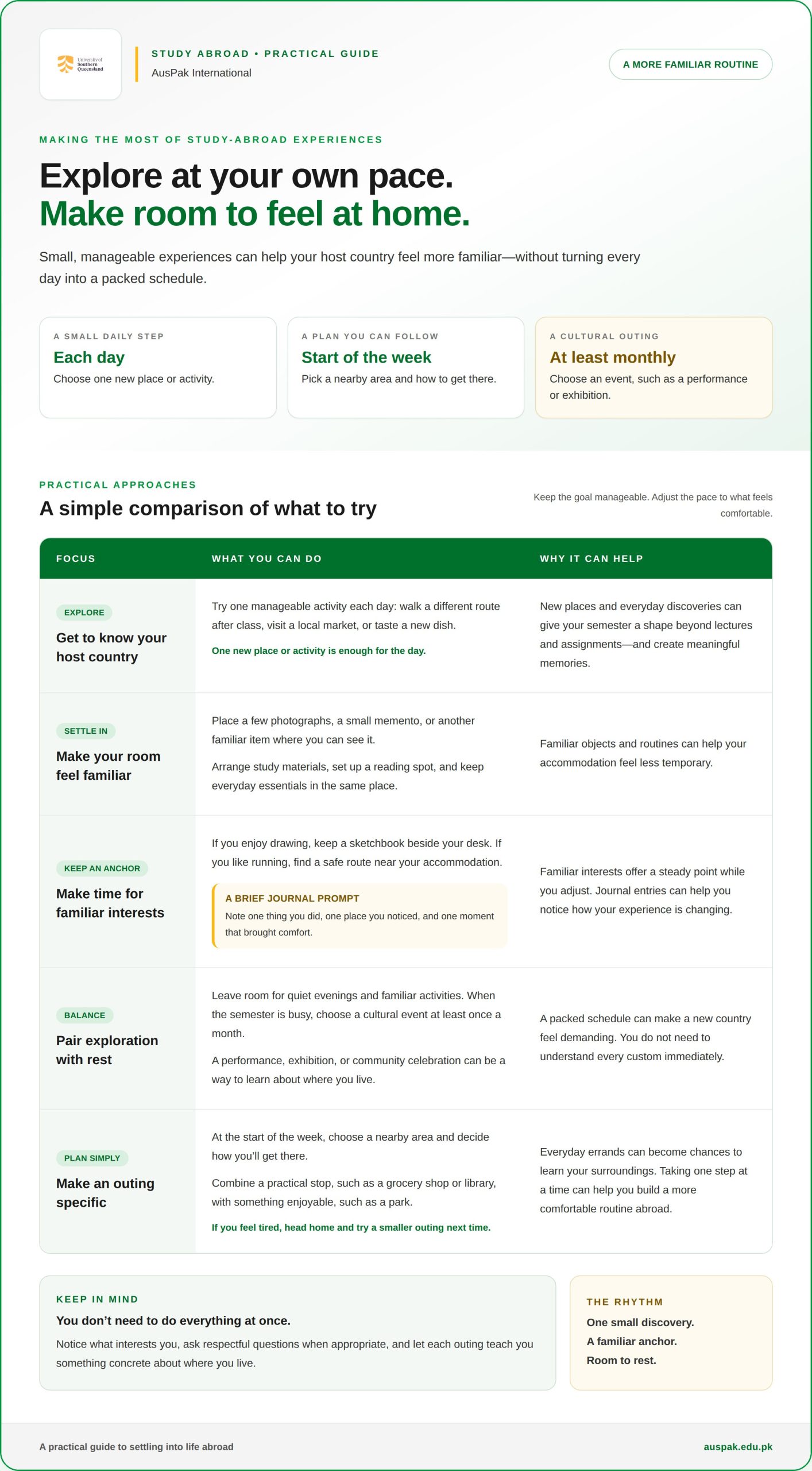
Choose one small activity each day to help you get to know your host country. Walk a different route after class, visit a local market, or try a dish you haven’t tasted before. These experiences give your semester a shape beyond lectures and assignments, and can become meaningful memories, from a favourite street to music playing in a café. Keep the goal manageable: one new place or activity is enough for the day.
Make your accommodation feel more familiar with objects and routines you choose. Before leaving, pack a few photographs, a small memento, or another familiar item that fits easily in your luggage. Once you’re settled, put them somewhere visible, such as beside your desk or bed. A simple unpacking routine can help the room feel less temporary: arrange your study materials, set up a reading spot, and keep everyday essentials in the same place.
Build a routine around activities you already enjoy. If you draw, keep a sketchbook beside your desk; if you like running, find a safe route near your accommodation. Familiar interests offer a steady point while you adjust to a new environment. Keep a journal and briefly note one thing you did, one place you noticed, and one moment that brought comfort. Reading these entries later can help you see how your experience is changing.
Balance exploration with rest. A packed schedule can make a new country feel demanding, so leave room for quiet evenings and familiar activities. When your semester gets busy, choose a cultural event at least once a month, such as a performance, exhibition, or community celebration. You don’t need to understand every custom immediately. Notice what interests you, ask respectful questions when appropriate, and let each outing teach you something concrete about where you live.
Make plans that are specific enough to follow. At the start of the week, choose a nearby area to explore and decide how you’ll get there. Add a practical activity, such as finding a grocery shop or locating a library, alongside something enjoyable, such as visiting a park. This turns everyday errands into chances to learn your surroundings. If an outing feels tiring, return home and try a smaller one next time. Taking one step at a time helps you create a more comfortable routine abroad.
3. Connecting with cultural and faith communities
A cultural association, faith community, or language group can offer familiar connections as you learn local customs. Look through your university’s student association directory for cultural, language, or faith groups. If you’re a Pakistani student abroad, a Pakistani student society may be a place to meet peers who understand familiar traditions. You can also ask the international student office which groups welcome newcomers, then attend an open event to see if it feels comfortable.
Use cultural exchange to build a sense of belonging in both directions. Share a traditional recipe at a gathering, join a language exchange, or ask a classmate about a local celebration. You might explain a family tradition while learning how classmates mark a holiday. These conversations help you share what you want others to know about your culture and discover customs in your host community. Start by listening and asking respectful questions.
A faith community can offer a meaningful routine in an unfamiliar place. Look for a nearby place of worship or a campus faith group, then choose an activity that fits your beliefs and schedule. A regular service, study group, or shared meal may provide a familiar rhythm and opportunities to meet people. If attending feels daunting, contact an organiser beforehand to ask what to expect at your first gathering.
Culture shock can surface in everyday situations, such as unfamiliar classroom expectations, a different style of humour, or confusion during a meal. Instead of judging yourself, identify what felt difficult. Write down what happened, what you expected, and what you might ask next time. For instance, if a class discussion moved quickly, ask a classmate afterward how they understood it.
Universities, international student offices, and student associations can point you to orientation sessions, peer networks, cultural groups, and student support. Ask the international student office which communities welcome new students, then attend an event with a simple goal, such as introducing yourself to one organiser or learning when the group meets next.
Connecting with your host community in your first weeks abroad can help you feel less homesick throughout your program. Start with one event, remember a name, and return if it feels worthwhile. A cultural gathering could become a memorable part of your experience, but it’s normal for a new community to take time to feel familiar. Participate gradually, and stay open to different ways of belonging.
4. Self-compassion and accepting discomfort
Common signs of homesickness include missing familiar people, routines, food, or places, and feeling lonely in a new environment. These emotions can arise as you adjust to unfamiliar surroundings, distance from family, and different daily expectations.
Feeling homesick doesn’t erase the excitement of studying abroad. Both feelings can exist at once: you might enjoy a lecture and still miss a family meal later that day. Recognising this contrast helps you describe what you feel without treating it as proof that your decision was wrong. Homesickness is a human response to separation, not a personal failure.
Try a “Feels vs Reals” journal when emotions seem to take over. Write what the feeling tells you, then record what you know about the situation. For example, “I feel that I’ll never settle in” might sit beside “I attended class, spoke with a classmate, and found my way home.” A few sentences each day can help you notice patterns and identify what makes difficult feelings stronger.
There’s no single timeline for homesickness. The first few weeks of adjustment can feel especially difficult, and missing home may continue during the first few months abroad. Give yourself time to adapt and notice small changes, such as recognising familiar routes or looking forward to a class. Progress can be uneven, so one difficult day doesn’t undo the steps you’ve already taken.
Homesickness alone doesn’t establish depression or anxiety. If isolation feels overwhelming, or emotional distress makes studying, sleeping, or managing everyday responsibilities difficult, seek support from your school’s counselling service or a local professional. You don’t need to wait until you can name the problem; explain what has changed and how it affects your routine.
Use practical care to support yourself while you adjust. Keep a steady bedtime, eat regular meals, and add a walk or another form of physical activity to your day. If a global campus feels unfamiliar, choose one manageable task, such as preparing breakfast or walking to class, and focus on that rather than judging your entire experience.
Speak to yourself as you would to a friend: “This is hard today, and I can take one step forward.” That step might be writing in a journal, attending one class, or asking someone you trust to listen. Self-compassion doesn’t mean you have to feel positive all the time; it offers a kinder way to meet difficult emotions while building a life abroad.
5. Sharing study-abroad experiences with loved ones
Let family and friends see more than the polished highlights. Share a photo of your university library, a meal between lectures, or the street you take to class. Add a short caption about what caught your attention. These details give people at home a clearer picture of your daily life and help you notice how much you’re learning about your new surroundings.
Choose a format you can maintain comfortably. A voice note can capture the sound of a busy campus; a short message can describe a language mix-up or an assignment challenge. If writing takes too long after class, record a quick update on your walk home. A simple personal detail often starts a more meaningful conversation than a general “everything is fine.”
Make sharing interactive. Ask a sibling to recommend a song for your next trip across town, or invite a parent to choose between two pictures for your study-abroad album. These small exchanges let loved ones take part without needing to understand every detail of your studies. They also give you a reason to describe what you’re seeing, tasting, or discovering.
Keep a private record as well as updates for others. Add a few lines to a journal after a memorable lecture, a difficult day, or a conversation in another language. Later, choose an entry to share with someone you trust. This lets you decide what feels personal while preserving experiences you might otherwise forget during a busy semester.
Set expectations before busy periods arrive. Tell family when exams, projects, or university events may limit your replies, and agree on a practical way to reconnect afterward. For example, send a brief message before an exam week, then share a fuller update once your assignment is submitted. Clear communication can prevent a quiet phone from being mistaken for distance or disinterest.
Share complicated moments, not just successes. If a class discussion felt difficult or homesickness returned after a familiar holiday, tell a trusted friend what happened and what kind of response would help. You might want advice, a listening ear, or simply a conversation about home. This honest exchange can make long-distance relationships feel more present as you build connections where you study.
Pictures of your adventures can help loved ones feel closer. Calls, text messages, and photos are all ways to stay in touch with close friends and relatives. Setting up weekly video calls with family and friends may help you manage homesickness while studying abroad. Schedule regular calls, but leave time to engage with your host community. When you need support, contacting a friend or family member by video call can help you feel connected.
AusPak International: Canada Study Permit Assistance
AusPak International offers Canada Study Permit Assistance for Pakistani students preparing to study in Canada. After exploring ways to feel more connected abroad, planning your study journey can be a practical next step. Permit preparation is a separate part of that journey, while building friendships and routines can help you settle into student life after arrival.
AusPak International also offers Onshore Arrival Support as you begin adjusting to your new surroundings. If you’re still considering destinations, Australian University Admission Support and UK Student Visa Consultancy are also available. Choose a destination that fits your plans, then focus on the application support relevant to that choice.
Contact AusPak International to discuss Canada Study Permit Assistance and your next steps.
Take your next step with confidence
Feeling connected abroad is something you can build over time while staying close to the people and routines that matter. If you’re dealing with homesickness while studying abroad, choose one small action today: share a moment with someone at home or make a plan that helps you feel more prepared for the journey ahead.
For Pakistani students planning to study internationally, AusPak International offers Australian University Admission Support, UK Student Visa Consultancy, and Canada Study Permit Assistance. The right next step depends on your intended destination and where you are in the application process. Focus on the practical decisions you can make now, then keep building the relationships and routines that will support you after arrival.
Contact AusPak International for support with your study plans. Your time abroad can become a place to grow, connect, and create meaningful experiences, one step at a time.
Frequently Asked Questions
What practical steps can students take to cope with homesickness abroad?
A practical way to deal with homesickness while studying abroad is to notice what tends to intensify it, then plan a small response. Keep a brief record of difficult moments, such as evenings after class or weekends without plans. Use the pattern to choose a manageable activity, such as a walk, a meal, or a mindfulness exercise. Regular sleep, nourishing meals, and movement can also support day-to-day wellbeing.
How can international students stay connected with family without increasing homesickness?
Make contact intentional, and notice how different kinds of communication affect your mood. If scrolling through family updates leaves you feeling left out, limit social media and try a 30-minute morning check-in instead. Use that time to respond to messages, then shift attention to your day abroad. If a call feels upsetting afterward, take a short walk or focus on a familiar task before returning to study.
How can students build friendships and a sense of belonging on campus abroad?
Use a shared campus task as an easy way to connect. Ask a classmate if they’d like to review lecture notes together or prepare for an upcoming seminar. A study session gives conversation a natural focus without requiring instant personal closeness. If you enjoy a group activity, return regularly and take part consistently. Familiar faces and shared responsibilities can make campus feel more welcoming.
What cultural adjustment challenges can worsen homesickness, and how can students handle them?
Unfamiliar communication styles, classroom expectations, humour, or everyday customs can leave you unsure how to respond. When a moment feels confusing, separate what happened from what you assume it means. Note the phrase or interaction that puzzled you, then ask a trusted classmate for context. Learning a few common expressions in the local language can also make routine conversations easier and help reduce misunderstandings.
What low-cost activities and routines can help students feel more at home abroad?
Try routines that use simple materials and places already available to you. Sketch in a notebook, read in the campus library, or prepare a familiar meal with ingredients you can find nearby. You could also walk the same route regularly and notice one new detail each time, such as a shop sign or a quiet place to sit. These small habits add structure without requiring an elaborate plan or an expensive outing.